
Author: Cyntia Lase
We all know the Google search engine is a tool to help us find things or gather knowledge about a particular topic. Because of this, Search Engine Optimization (SEO) is something almost everyone is familiar with. SEO came about right after search engines as a way to optimize visibility for business owners, brands, and celebrities.
But Is It traditional SEO dying?
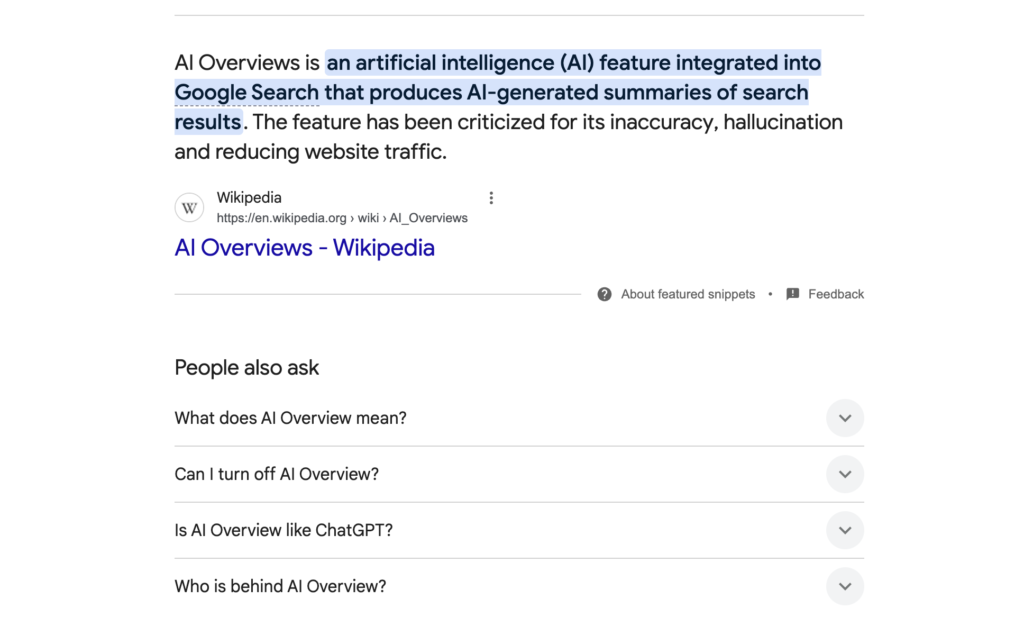
Today, users do not want to scroll through 10 different blue links to piece together an answer; they want an AI to read those links for them and generate a single, perfect summary. This behavioral shift has birthed two massive new strategies

[Image source: Pexel]
- AIO (AI Overview Optimization): The process of optimizing your website to be featured in Google’s new AI-generated summaries at the top of the search page.
- GEO (Generative Engine Optimization): The science of formatting your content so that AI chatbots (like ChatGPT, Claude, and Perplexity) cite and recommend your brand.
Marketers are hyped up—and slightly panicked—because whoever masters GEO first will capture a massive wave of new AI-driven traffic. According to the research firm Gartner, traditional search engine volume is projected to drop by a massive 25% by 2026 as users migrate to AI chatbots [1].
Traditional SEO vs. GEO: The “Yoga Mat” Breakdown
To understand why GEO is the future of modern SEO, let’s look at how you would market a simple product—like a yoga mat.
The Traditional SEO Approach:
If you were selling a yoga mat in the past, your traditional SEO strategy would focus heavily on keywords. You would build a webpage and repeat the phrase “yoga mat” and long-tail variations like “cheap blue yoga mat” as many times as possible so the algorithm would rank you.
The Modern GEO Approach:
AI generative engines do not care how many times you repeat a keyword. GEO focuses on context. If a user asks an AI, “What is the best thick yoga mat for a 50-year-old with bad knees doing hot yoga?”, the AI will completely ignore keyword-stuffed websites.
To win with GEO, your webpage must explain the deep context of the item. You must explain exactly when the item is best used (hot yoga vs. pilates), for what kind of audience (beginners with bad knees), and for which specific use cases. When you provide this rich context, the AI views your business as a factual, authoritative expert that perfectly answers the user’s highly specific prompt.

[Image source: Pexel]
Where Can We Learn About AIO and GEO?
Because this is a brand-new field, the rulebook is being written right now. If you want to stay ahead of your competitors, here are the best places to learn:
- The Princeton University GEO Paper (2023): The term “Generative Engine Optimization” wasn’t invented by a marketing guru; it was coined in a 2023 peer-reviewed paper by researchers at Princeton University, Georgia Tech, and the Allen Institute for AI [2]. They tested 10,000 queries to see exactly why AI cites certain websites. (You can read this paper for free on arXiv.org).
- HubSpot Academy: HubSpot has heavily invested in adapting to AI search and regularly publishes free, highly researched guides on their blog about how businesses can pivot their content strategies.
- Reverse-Engineering (The Best Teacher): Open Perplexity.ai (the leading AI search engine) and search for your own industry. Look closely at the footnote citations [1, 2, 3] the AI provides. Click those links and study how your competitors formatted their winning content.
How to Implement GEO in Your Business Today
You do not need a degree in computer science to adapt to this AI domino effect. Based on the scientific findings from the Princeton GEO study, here are three practical ways you can optimize your business for AI today:
1. Add “Citeable” Statistics and Data
AI models are terrified of “hallucinating” (making up fake facts). Therefore, they are obsessed with hard data. The Princeton study found that adding unique statistics to your content was one of the best ways to boost GEO visibility, increasing AI citations by up to 31% [2].
Action Step: Stop using vague marketing language. Instead of writing, “Our software saves you time,” write, “According to a 2024 internal survey, 85% of small businesses saved 10 hours a week using our software.” The AI will lift that exact statistic and link to your site as the source.
2. Use Direct Quotations from Experts
AI bots are trained to look for authoritative human voices to back up their generated text. The study found that “Quotation Addition” boosted AI visibility by a massive 41% [2].
Action Step: When writing a blog post or product page, include a direct, attributed quote from a subject matter expert. If you sell plumbing supplies, include a quote block from a licensed master plumber explaining why a specific pipe is better. The AI is highly likely to copy this quote directly into its answer.
3. Format for “Extractability” (Q&A Style)
AI engines do not read your website like a human reading a novel; they scan the HTML looking for quick answers. If your website is just massive walls of text, the AI will skip it.
- Action Step: Make it easy for the AI to extract your information. Use clear Subheadings (H2 tags) formatted as conversational questions (e.g., “Will this yoga mat slip during hot yoga?”). Immediately below the heading, answer the question directly in 1 to 2 short sentences using bullet points.
SO is it SEO dying?
Far from being obsolete, traditional search optimization remains a cornerstone of modern marketing. Rather than a replacement, SEO has evolved into a vital pillar that works in tandem with new technologies to maximize click-through rates. By mastering the fundamentals of how search engines index information, professionals can more seamlessly transition into the context-driven world of GEO and AIO.
Artificial intelligence has been hiding in plain sight for decades, quietly organizing our emails and video games. But now, it is officially the gatekeeper between your business and your customers. By abandoning the old days of keyword stuffing and embracing the context-driven rules of AIO and GEO, you can future-proof your business and ensure that when the world asks an AI for a recommendation, it confidently says your name.
Disclaimer:
This article was drafted with the assistance of AI technology and reviewed by a human author for accuracy, clarity, and tone.
Citations & Sources
- [1] Gartner Research (February 2024): “Gartner Predicts Search Engine Volume Will Drop 25% by 2026, Due to AI Chatbots and Other Virtual Agents.” [Press Release].
- [2] Aggarwal, P., Murahari, V., Rajpurohit, T., Kalyan, A., Narasimhan, K., & Deshpande, A. (November 2023): “GEO: Generative Engine Optimization.” (arXiv:2311.09735). This is the foundational academic study that formalized GEO and proved how formatting changes (like quotes and statistics) directly impact AI citation algorithms.