
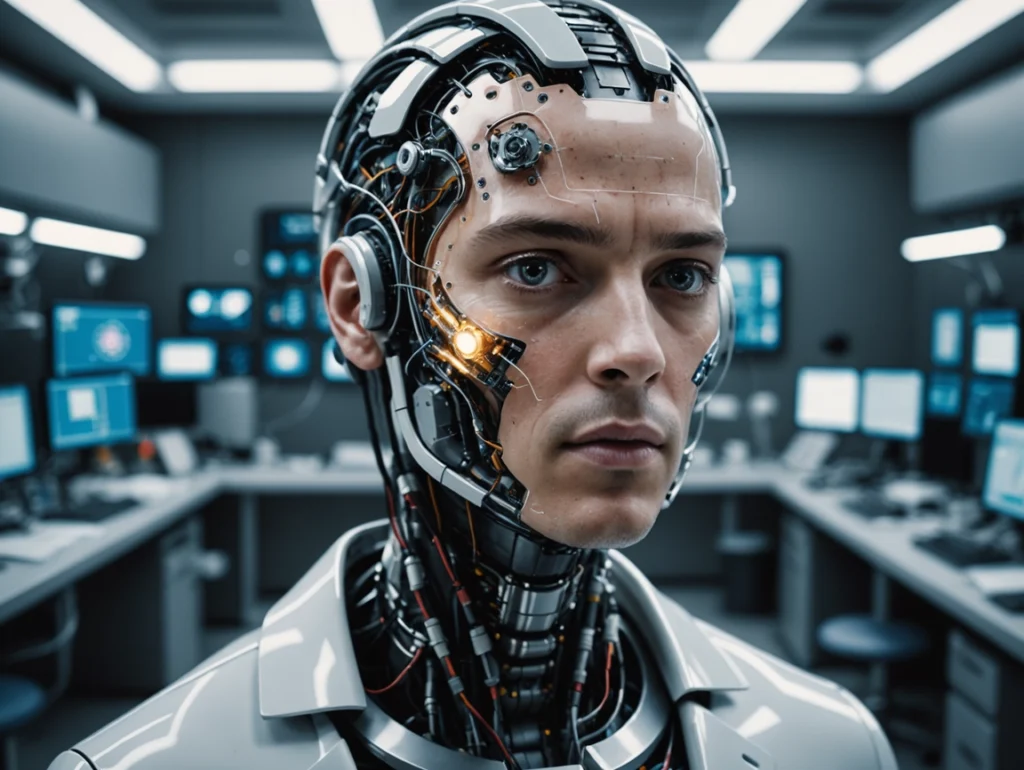
Author: River [Image Source: Elementor]
With 100 million users in just two months, OpenAI’s ChatGPT became one of the most popular apps in history in 2023. For many, it marked the introduction of artificial intelligence into everyday life, leaving specialized research labs. All of a sudden, artificial intelligence was doing more than just generating search results and recommendation engines; it was also writing essays, writing music, writing code, and even assisting physicians in summarizing medical records. AI was no longer an unseen infrastructure, which was a powerful symbol. It had evolved into a partner in thought, a collaborator, and occasionally a threat to human creativity.
This wasn’t just a tech fad that went viral. It was a turning point. AI is becoming more visible, interactive, and essential to how society functions, learns, and innovates; it is no longer limited to the back end of technology. AI has gone beyond expectations, changing industries and redefining human potential through innovations in healthcare and industrial automation.
From Automation to Innovation: AI’s Expanding Role
AI was first developed as a tool to automate repetitive processes, such as email sorting, product recommendations, and fraud detection. However, its function now extends well beyond automation. AI is enabling predictive climate models, driving advances in drug discovery, and even producing literature, music, and art.
AI enhances human creativity rather than replaces it. AI is being used by architects to create smarter cities. Researchers are simulating experiments on a never-before-seen scale. Companies use AI to spot trends before they happen. This transition from automation to innovation demonstrates that AI is a collaborator in discovery rather than merely a tool.
Transforming Industries Beyond Imagination
AI is changing what is feasible in a variety of industries:
Healthcare: While personalized medicine customizes treatments for each patient, AI-driven diagnostics can identify diseases earlier than human physicians.
Education: By eliminating the one-size-fits-all approach, adaptive learning platforms offer millions of students personalized instruction.
Finance: Real-time global market monitoring by algorithms helps identify fraud and improve investment plans.
Creative fields: AI systems are now used in conjunction with musicians, filmmakers, and writers to co-create new works.
Efficiency is not the only effect; transformation is as well. Human-AI cooperation is redefining entire industries.
The Global AI Race
A worldwide competition for leadership has been sparked by the development of AI. In terms of research, funding, and patents, the US and China are in the lead, but Europe, Japan, and South Korea are specializing in applied AI, robotics, and regulation. With AI expected to boost China’s economy by $600 billion a year by 2030, the country’s growth is especially impressive. With the first AI regulatory framework, the European Union is influencing international standards in the meantime. This race is about who lays the moral and technological groundwork for the future, not just about economics.
Rethinking Work and Human Potential
AI presents both opportunity and uncertainty for workers. While some jobs are being automated, others are being created, such as ethicists, human-AI workflow designers, and AI trainers.
In reality, AI replaces laborious, hazardous, or repetitive tasks, allowing humans to concentrate on complex decision-making, creativity, and empathy. AI has the ability to redefine human potential rather than replace it.
A Future We Choose
Artificial intelligence has arrived and is rapidly expanding. It might be integrated into every tool we use in ten years, from our homes to our workplaces, from our hospitals to our classrooms. However, its function is not set in stone.
Is AI made to empower or to exploit? Do we use it to increase opportunity or do we allow it to increase inequality? AI has the potential to help humanity overcome its biggest problems, from reversing climate change to curing diseases, if it is used responsibly. We have the option.
References:
The 2024 AI Index Report”, Stanford University (2024). Retrieved from: https://aiindex.stanford.edu/report/
“Generative AI: The Next Productivity Frontier”, McKinsey (2023). Retrieved from: https://www.mckinsey.com/capabilities/mckinsey-digital/our-insights/the-economic-potential-of-generative-ai
“Artificial Intelligence in Healthcare: Transforming Patient Care”, Forbes (2024). Retrieved from: https://www.forbes.com/sites/forbestechcouncil/2024/02/12/artificial-intelligence-in-healthcare-transforming-patient-care/
“China’s AI Strategy: Leading the Global Race”, MIT Technology Review (2023). Retrieved from: https://www.technologyreview.com/
*Disclaimer: This article was drafted with the assistance of AI technology and then critically reviewed and edited by a human author for accuracy, clarity, and tone.