
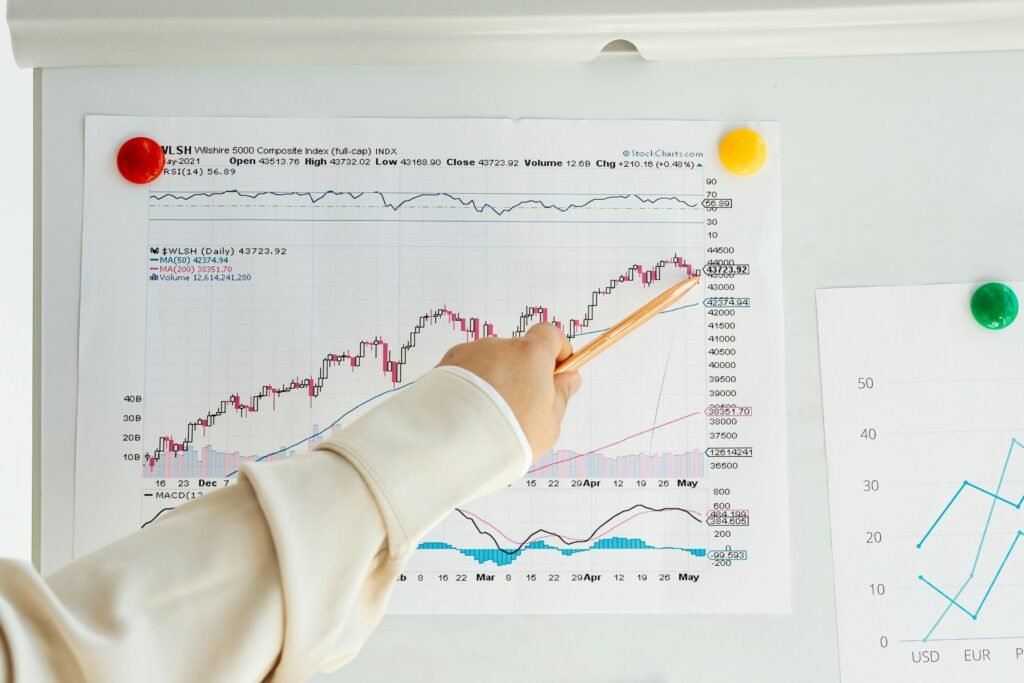
Author: River [Image Source: www.kaboompics.com /Pexels]
Artificial Intelligence (AI) has evolved from a silent background tool to the main force behind contemporary digital marketing. Brands have gathered enormous amounts of data from websites, social media, and consumer interactions during the last ten years. However, until recently, a large portion of this data was either underutilized, siloed, or just too big for human teams to effectively analyze.
That obstacle no longer exists today. AI has developed from a system that only processes data to one that can now learn, make predictions, and take action on its own. It comprehends consumer behavior rather than merely analyzing it. These days, it takes seconds rather than weeks to go from raw data to strategic decision-making. As we move into the middle of the 2020s, algorithmic intelligence and human creativity are working together to redefine the digital marketing sector rather than relying solely on human intuition.
We look at how AI is changing each step of the marketing process below, from analyzing data to influencing choices that will affect how consumers and brands interact in the future.
Intelligent Data Interpretation: From Noise to Narrative
Not all data is insight, but every click, scroll, and search produces data. Marketers battled for years to make sense of vast amounts of disjointed data. While traditional analytics tools could provide a summary of performance, they rarely provided insight into the reasons behind customer behavior.
AI totally alters that dynamic. Millions of data points are analyzed concurrently by contemporary machine learning models, which spot minute patterns that human analysts would miss. In addition to measuring engagement, tools like Adobe Sensei and Google’s AI-powered Performance Max can identify sentiment patterns, emotional reactions, and changes in behavior across channels. AI, for instance, can identify that users in a given region respond better to succinct text, while others prefer visual storytelling. This enables brands to customize campaigns on a regional level without the need for human intervention. AI essentially creates a marketing narrative out of data noise.
However, this ability creates a paradox: while machines are able to identify patterns, they are not empathetic. AI might be able to comprehend consumer behavior, but not always why. Human marketers are still crucial in this situation because they can translate insights into compelling emotional narratives. The ability to use data to tell the most compelling story will determine the future of marketing intelligence, not who has the most data.
Dynamic Decision-Making: Marketing in Real Time
Conventional marketing campaigns had a set schedule: plan for months, carry them out, and then assess the results. The market had already shifted by the time insights were received.
AI completely breaks that cycle. Algorithms that are capable of making decisions in real time can immediately optimize campaigns as they develop. They automatically modify parameters like ad spend, creative design, and audience targeting based on real-time feedback and continuously monitor performance metrics.
For example, the AI system may change the campaign format from static images to short-form videos that are best suited for nighttime audiences if engagement declines after a predetermined amount of time. Put another way, campaigns are now self-evolving rather than reactive.
Amazing speed and efficiency are made possible by this autonomy. But it also calls into question the conventional function of marketing managers. How can teams preserve creative direction and brand consistency when algorithms make snap decisions? The solution is symbiosis: AI manages execution with accuracy, while humans establish the brand’s vision and ethical standards. Leadership in the new digital marketing era will entail directing algorithms as well as people.
Predictive Engagement: Knowing What Customers Want Before They Do
Although AI has elevated predictive analytics into a new paradigm—anticipatory engagement—it has long been a marketing buzzword. AI is now able to predict individual customer needs, behaviors, and emotions in real time, rather than just predicting trends.
Consider a customer looking through fitness gear on the internet. AI can forecast when a person is likely to make a purchase and what offer will convert them based on thousands of behavioral variables, including location, past purchases, and even sentiment from social media. At the ideal time, it could recommend a complementary product or initiate a customized discount.
A similar predictive system that goes beyond simple suggestions is used by Netflix. Its algorithms examine emotional tone and narrative preferences to determine why particular viewers favor particular types of content. This implies that brands in marketing are able to forecast motivation in addition to behavior.
But there are also moral dilemmas brought up by this profound level of understanding. It’s easy for predictive marketing to veer from personalization to manipulation. At what point does comprehension turn into exploitation? Brands need to make sure that anticipation adds value rather than control as AI grows more perceptive. Which businesses gain and which lose trust will depend on their ethical design and transparency.
AI-Powered Creativity: Machines as Co-Creators
For decades, creativity was considered the last domain untouched by machines. Yet with the rise of generative AI, that boundary has vanished. Tools like ChatGPT, Midjourney, and Runway enable marketers to generate entire ad campaigns in hours rather than weeks. From headlines and product descriptions to visuals and videos, AI can now produce creative assets that rival human work.
Take Coca-Cola’s 2023 “Create Real Magic” initiative. The brand invited users to generate custom artwork using AI tools, merging global participation with cutting-edge technology. It wasn’t just marketing—it was collaborative storytelling.
However, over-reliance poses a risk. Creative output runs the risk of becoming homogenous—algorithmically flawless but emotionally devoid—if all brands use the same AI tools and datasets. Marketers of the future must view AI as a creative catalyst rather than a substitute. The magic will occur when human creativity and machine accuracy come together to produce ideas that neither could come up with on its own.
Customer Experience Automation: Cognitive Engagement and Empathy
In the past, customer service was reactive: brands responded to user inquiries. AI now makes large-scale, proactive, personalized engagement possible. AI-driven assistants are able to comprehend tone, mood, and intent through the use of natural language processing (NLP) and emotion recognition.
For instance, Starbucks’ “Deep Brew” AI customizes promotions according to customers’ past purchases and the time of day, while Sephora’s conversational bots can suggest cosmetics that complement both skin tones and current fashions. These exchanges now feel conversational and intuitive rather than transactional.
However, identity boundaries are also blurred by cognitive AI. Consistency, empathy, and cultural sensitivity become essential when chatbots take on the role of a brand’s “face.” A badly thought-out AI response can quickly erode customer confidence. As a result, just as much thought must go into programming emotional intelligence as analytical intelligence. Brands that train their AI to feel human, rather than just act human, will be the ones that thrive.
The Data Ethics Dilemma: Privacy as the New Personalization
Data is the lifeblood of marketing as AI becomes its brain. However, great data also comes with great responsibility. Customers are becoming more conscious of how AI-driven experiences are powered by their personal data, and many are resisting.
Marketers are being forced to reconsider their data strategy by privacy-first initiatives such as Google’s move to cookieless advertising and Apple’s App Tracking Transparency. Leading businesses are using ethical AI models based on consent and transparency rather than abusing personal data.
This is about competitive advantage, not just compliance. 73% of consumers are more likely to purchase from companies that provide clear information about how their data is used, according to a Deloitte study. The message is unmistakable: the new currency of marketing is trust.
“Ethical personalization” will take the place of “hyper-personalization” in the upcoming years. The real winners of the AI era will be the companies that uphold privacy while maintaining relevance.
AI Integration Across the Marketing Ecosystem
These days, AI is used for much more than just advertising. McKinsey’s State of AI 2024 Report states that 65% of businesses using AI do so for a variety of purposes, including pricing strategy, CRM optimization, content creation, and consumer analytics.
AI, for example, can synchronize a business’s whole marketing ecosystem, including forecasting supply chain requirements, analyzing product demand, dynamically adjusting prices, and coordinating all of this with campaign strategy. With this degree of integration, marketing is no longer a stand-alone division but rather serves as the enterprise’s central nervous system.
But there is a risk associated with integration. Biases or data silos can compromise the dependability of AI systems in the absence of adequate governance. For every automated decision to be consistent, accountable, and equitable, marketers must place a high priority on AI literacy and cross-departmental cooperation.
The Road Ahead: From Automation to Augmentation
As AI develops further, its actual potential will be to enhance humans rather than replace them. While humans concentrate on creativity, empathy, and ethics, machines will manage the complexity—analyzing billions of variables, optimizing strategies, and carrying out campaigns.
The marketer of the future will be a technologist and strategist who combines computational reasoning with emotional intelligence. The ability of humans and machines to work together, not compete, will determine success.
In the end, the shift from data to decisions is philosophical as well as technological. It pushes us to consider “How can AI help marketing stay human?” rather than “What can AI do for marketing?” The most effective algorithms will be those that assist brands in communicating with respect and authenticity rather than those that sell the most goods.
References:
-
- Forbes Tech. (2024). AI-Driven Marketing: Turning Data into Decisions. Retrieved from https://www.forbes.com
-
- Deloitte Insights. (2024). The Future of Predictive Marketing. Retrieved from https://www.deloitte.com
- Deloitte Insights. (2024). The Future of Predictive Marketing. Retrieved from https://www.deloitte.com
-
- McKinsey & Company. (2024). The State of AI in 2024: Integrating Intelligence Across the Enterprise. Retrieved from https://www.mckinsey.com
- McKinsey & Company. (2024). The State of AI in 2024: Integrating Intelligence Across the Enterprise. Retrieved from https://www.mckinsey.com
-
- Coca-Cola. (2023). Create Real Magic Campaign.
- Coca-Cola. (2023). Create Real Magic Campaign.
-
- Apple. (2023). App Tracking Transparency Framework.
- Apple. (2023). App Tracking Transparency Framework.
-
- Netflix Tech Blog. (2023). Personalization Beyond the Algorithm.
- Netflix Tech Blog. (2023). Personalization Beyond the Algorithm.
-
- Adobe. (2024). AI-Powered Marketing with Adobe Sensei.
- Adobe. (2024). AI-Powered Marketing with Adobe Sensei.
Disclaimer: This article was drafted with the assistance of AI technology and subsequently reviewed and edited by a human author for factual accuracy, clarity, and narrative tone.