
[Image source: Pexel]
The AI Honeymoon is over and novelty has worn off. For the last few years, “generative AI” was a buzzword tossed around in keynote slides and LinkedIn posts. In 2026, it’s something else entirely a force actively rewriting who gets hired, who gets laid off, and who gets left behind.
If you’ve felt a quiet unease about your job security lately, you’re not imagining it. The data backs up the feeling and so does the silence from companies that used to promise “AI will create more jobs than it destroys.” That promise is being tested in real time, and for a growing number of professionals, it isn’t holding.
The Numbers Behind the Anxiety
According to outplacement firm Challenger, Gray & Christmas, the US tech sector recorded over 52,000 layoffs in the first quarter of 2026 alone, a roughly 40% jump compared to the same period the previous year, with employers increasingly naming AI adoption and the cost of AI infrastructure as direct drivers of the cuts.
CBS News reported similar findings in its May 2026 labor coverage: companies have already announced nearly 50,000 AI-linked job cuts this year. But the more unsettling part of that report wasn’t the layoffs themselves, it was the warning from economists that AI’s bigger impact is showing up somewhere quieter: hiring that simply never happens. Junior and entry-level roles, the ones built around repetitive, easily-automated tasks, are the first to disappear from job boards entirely.
This is the part that should make every professional pay attention. It’s not just that companies are firing people. It’s that they are systematically not replacing them and instead, redirecting every open headcount toward a very specific kind of hire.
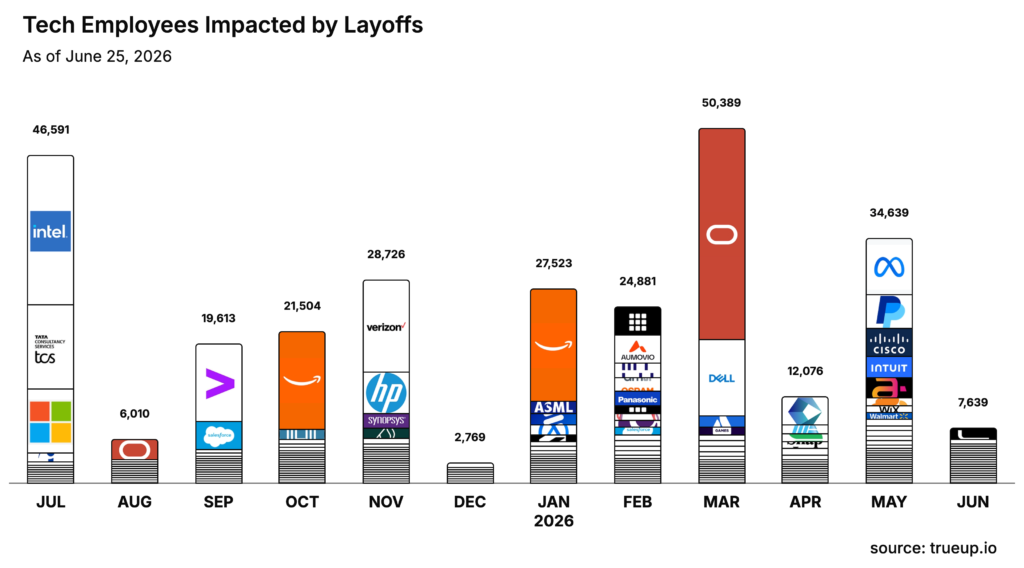
Image source: Trueup.io
Companies Aren’t Cutting Jobs. They’re Swapping Them
Across finance, IT, HR, marketing, and operations, a clear pattern has emerged: organizations are not simply shrinking. They’re reallocating. The roles disappearing are routine and manual. The roles multiplying are built around one trait is fluency in AI.
Industry research from the Global Skill Development Council’s 2026 forecasts identifies AI and data literacy, agentic AI systems, and AI scalability as the most in-demand skills of the year, concluding that digital fluency has moved from “nice to have” to a baseline expectation for almost every white-collar role. Traditional, manual-task positions like data entry, legacy software administration, routine reporting are losing relevance fast, not because the work vanished, but because an AI agent now does it faster and cheaper.
Here’s the uncomfortable truth buried in all of this: the market isn’t punishing AI adoption. It’s punishing the absence of it. Professionals who understand how to build, deploy, and work alongside AI systems are commanding premium salaries and unusual job security. Everyone else is competing for a shrinking pool of roles that won’t exist in two years.
So the real question isn’t “will AI affect my career?” It already has. The question is whether you’re going to be the person operating the AI system or the person it replaced.
You Can’t Wait for Your Role to Be Automated
It’s tempting to tell yourself there’s still time. That your industry is different. That your specific skill set is safe. But waiting until your role is already being phased out is the single most expensive mistake a professional can make right now because by the time the writing is on the wall, the hiring market has already moved on without you.
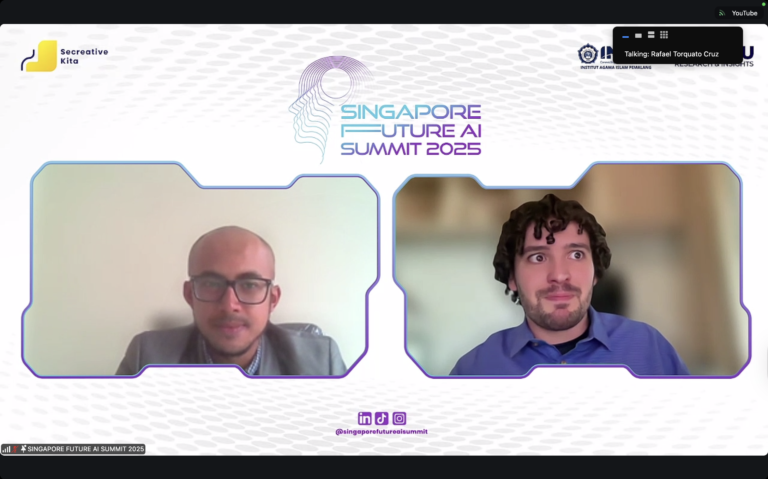
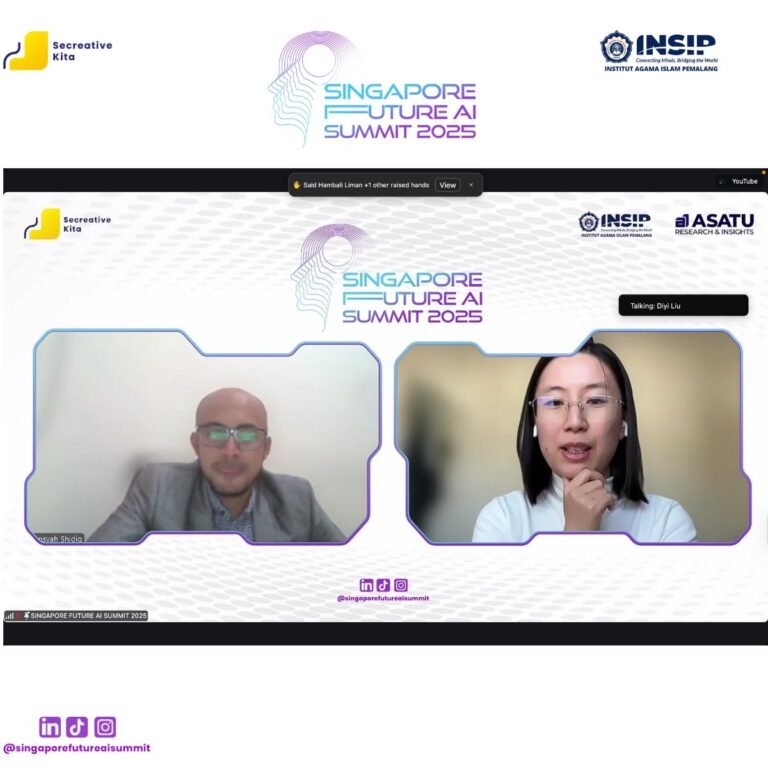
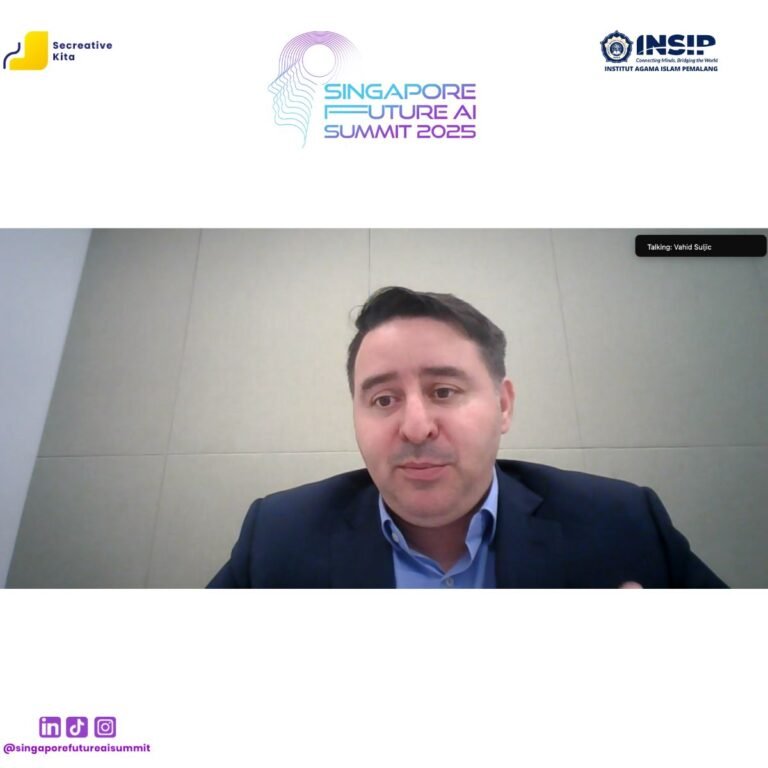
This is exactly the gap the Singapore Future AI Summit (SFAIS) 2026 was built to close.
SFAIS 2026 isn’t another corporate mixer with recycled panels and free coffee. It’s positioned as Southeast Asia’s premier gathering for next-generation AI innovation, deliberately built around what organizers call the “quadruple helix” bringing industry leaders, academic researchers, government policymakers, and startup founders into the same room, at the same time, working on the same problem: how do professionals and organizations actually keep pace with AI?
Singapore itself is a deliberate choice of venue. The country’s National AI Strategy 2.0 has positioned it as a regional AI hub, backed by dedicated AI centers of excellence and a fast-growing talent pipeline, making it one of the most credible places in Asia to take the region’s AI direction seriously.
What You Actually Walk Away With
For professionals weighing whether this is worth their time, the summit’s value comes down to three concrete outcomes:
Close the skills gap before it closes you out. SFAIS 2026 includes hands-on workshops and AI masterclasses built around the exact competencies employers are now prioritizing over traditional degrees and tenure, agentic AI workflows, applied data literacy, and AI integration into existing business processes.
Future-proof your role, not just your resume. Sessions are designed to show attendees how to securely fold AI agents and automation into daily workflows, turning you into the person who deploys the system, not the person it eventually replaces.
Build the relationships that are actually hiring. The summit’s networking is deliberately structured around the people setting ASEAN’s AI direction, industry leaders, innovators, and policymakers who are making hiring and investment decisions right now, not next year.
The Real Cost of “I’ll Get to It Later”
Every week you delay is a week your peers spend building the exact fluency that’s separating who gets promoted from who gets “restructured.” The unfortunate reality of this moment is that adaptation has a shelf life. Innovation without it isn’t neutral, it’s a vulnerability quietly waiting to be exploited by whoever moves first.
The fear of being left behind isn’t irrational right now. It’s a reasonable response to a labor market that is changing faster than most career plans can keep up with. But fear is only useful if it moves you toward action.
Don’t wait until your position is the one being “weak-hired” out of existence. Secure your seat at the Singapore Future AI Summit 2026 and walk in already ahead of the curve.
Register for SFAIS 2026 now — because the professionals who show up this year are the ones writing the job descriptions next year, not applying to them.
Sources
- SHRM – The AI Layoffs Narrative: Real Transformation, or Scapegoat?
- Challenger, Gray & Christmas labor market data, reported via The Times of India and NY Post, May 2026
- CBS News, “AI layoffs and entry-level hiring,” May 2026
- QA / Global Skill Development Council, 2026 Industry Skills Forecast
- Singapore Future AI Summit official site, sfais.org
Disclaimer:
This article was drafted with the assistance of AI technology and reviewed by a human author for accuracy, clarity, and tone.